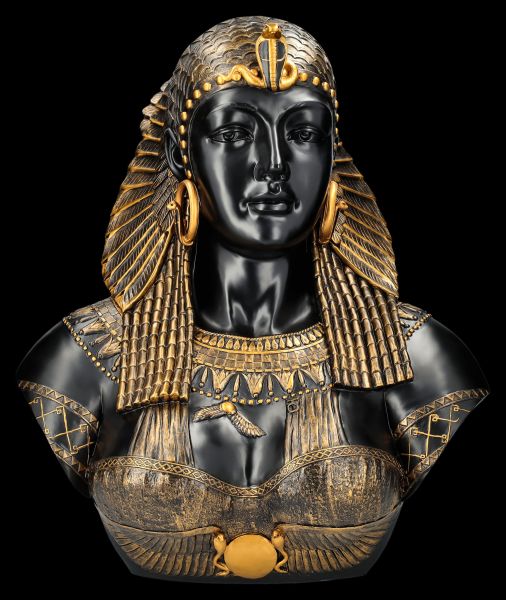
Egyptian King Figurines - Pharaohs as Decor
The pharaohs of ancient Egypt were regarded as mediators between gods and humans and were closely associated with Horus and the sun god Ra. The word "pharaoh" derives from the Egyptian "per aa" ("great house") and originally referred to the royal palace, before it was increasingly used for the ruler himself in the New Kingdom. Egyptian ruler figurines usually show characteristic insignia: the ceremonial beard, the nemes headdress or the double crown with the rearing uraeus cobra, and the crook and flail as symbols of royal rule.
Tutankhamun Figurines - Egypt's Boy King
Tutankhamun ascended the throne of Egypt at around nine years of age and reigned for roughly ten years until his early death. He became famous above all through his largely intact tomb in the Valley of the Kings, discovered by Howard Carter in 1922 – with the golden mask as its best-known find. During his reign he restored the cult of Amun, which Akhenaten – husband of Nefertiti – had pushed aside in favour of the Aten religion; his original name Tutankhaten became Tutankhamun in the process. Tutankhamun appears here mainly as a bust – from small decorative figurines to larger replicas, all hand-painted. Further gods and royal figures can be found among the Egyptian figurines.
FAQ about Pharaoh Figurines
Why do pharaohs have a beard?
The royal beard was an artificial ceremonial beard attached to the chin. It was one of the traditional insignia of kingship and emphasised the divine and royal dignity of the ruler. The female pharaoh Hatshepsut was also shown with this beard in many depictions.
How old was Tutankhamun when he died?
Tutankhamun died around 1323 BC at the age of about 18 or 19. The exact cause of his death is still debated.