Goddesses, Baphomet and ritual skulls
Goddesses and gods from Wicca and Celtic mythology sit at the heart of the range: Gaia as Mother Earth in several sizes and executions, Hecate with torches and hounds, Cernunnos as the Horned God, the Celtic mother goddess Danu, the Spiral Goddess and the Triple Moon Goddess. A seasonal cycle featuring four pentagram decorative pieces for Ostara, Litha, Mabon and Yule rounds out the selection with a ritual Wheel of the Year reference. The figurines come from Veronese, Nemesis Now, Oberon Zell and Maxine Miller and are predominantly crafted in cold-cast resin – bronzed, selectively coloured or fully hand-painted.
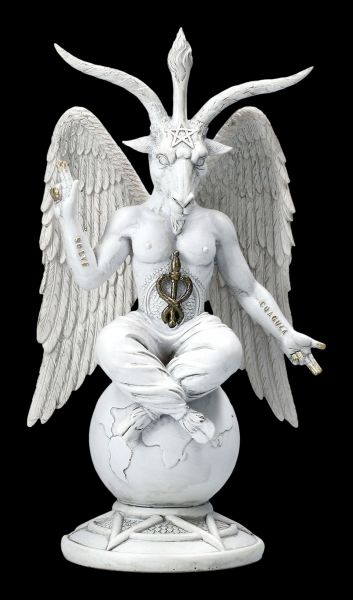
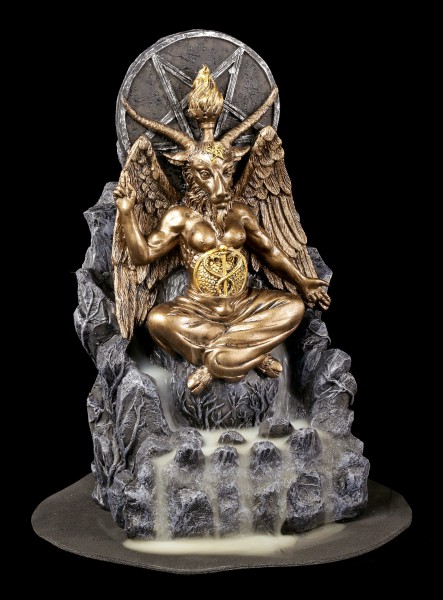
Baphomet is represented in several variants: seated and bronzed, as a large bust set with decorative stones, and as a white variant. Ritual skulls in cold-cast resin carry symbols such as the pentagram and Spirit Board. Alongside these come polished crystal skulls in genuine labradorite and obsidian – left in their natural state and unpainted, with the stone's own patterning carrying the visual character. Further pieces such as a black cat, a Santa Muerte-styled Grim Reaper and an owl figurine with wand round out the selection. Coordinated companion pieces are available under Altars & Supplies, where offering bowls, table altars and further ritual supplies sit alongside this category.
Frequently asked questions about magical figurines and skulls
What's the difference between bronzed and hand-painted figurines?
Bronzed figurines feature an even metallic surface in bronze or gold tones, sometimes combined with selective colouring on skin tone or other accents. Hand-painted figurines are individually finished and typically show more colour detail and expressive character. Both variants are crafted from cold-cast resin (polyresin) and built to the same level of structural quality.
What's the difference between cold-cast resin and crystal skulls?
Cold-cast resin skulls (polyresin) are hand-painted and can carry motifs, symbols and colour work. Crystal skulls in genuine labradorite or obsidian are left in their natural state, polished and showing the stone's natural appearance and patterning. Both suit altar and ritual use but differ significantly in presence and price point.
Who is Cernunnos?
Cernunnos is a Celtic god of nature, wild animals and the underworld, often depicted with antlers. He's regarded as one of the most significant deities in Celtic and modern pagan belief and is recognised in Wicca as the Horned God. Cernunnos figurines rank among the most widespread depictions on Wicca altars.
What does Baphomet represent?
Baphomet is an occult symbolic figure, conceived in the 19th century by occultist Éliphas Lévi as a depiction of the balance between opposites – with an animal head, human body, wings and various symbols. In modern gothic and occult aesthetics, Baphomet stands for esoteric knowledge, balance and dark spirituality.