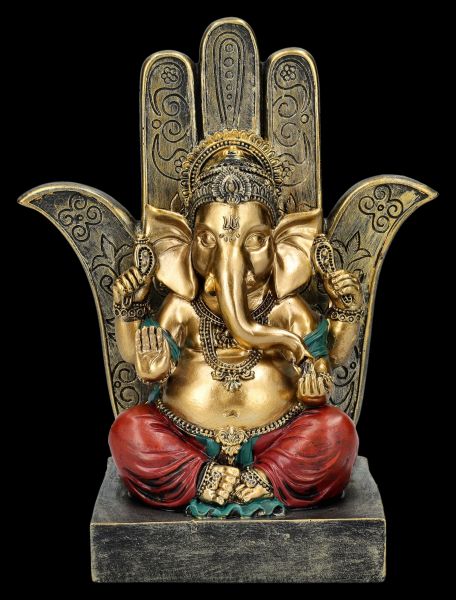
Hamsa Hand: Hand of Fatima and Hand of Miriam
The name hamsa comes from the Arabic word for "five" and refers to the five fingers of the stylised hand. In the Muslim world it is known as the Hand of Fatima, and in Jewish contexts as the Hand of Miriam. Hand amulets with a protective function have been widespread in the Middle East and North Africa for a very long time; the hamsa has been interpreted and named differently across various religious and regional traditions. It often bears an eye in the palm, and depending on the design its fingers point upwards or downwards.
Nazar Amulet: Protection against the Evil Eye
The belief in the "evil eye", said to bring misfortune through envy or ill will, is widespread around the Mediterranean and in the Middle East. One form of protection is the blue eye amulet, known as nazar in Turkey and mati in Greece. It is hung on doors, kept in the car or worn as jewellery to ward off the evil eye. There are also designs featuring the all-seeing eye, or Eye of Providence, which originates from the European Christian pictorial tradition and was later used in other symbolic contexts as well.
Hamsa and Evil Eye Décor
As incense stick holders, backflow incense burners, a copper bowl, trinket boxes or decorative figurines, the hamsa and nazar bring their symbolism into the home, for example in the entrance area or on a shelf. More boxes with protective and esoteric motifs can be found among the magical trinket boxes, more incense holders in the incense holders, and spiritual décor from Asia in Asian spiritual décor.